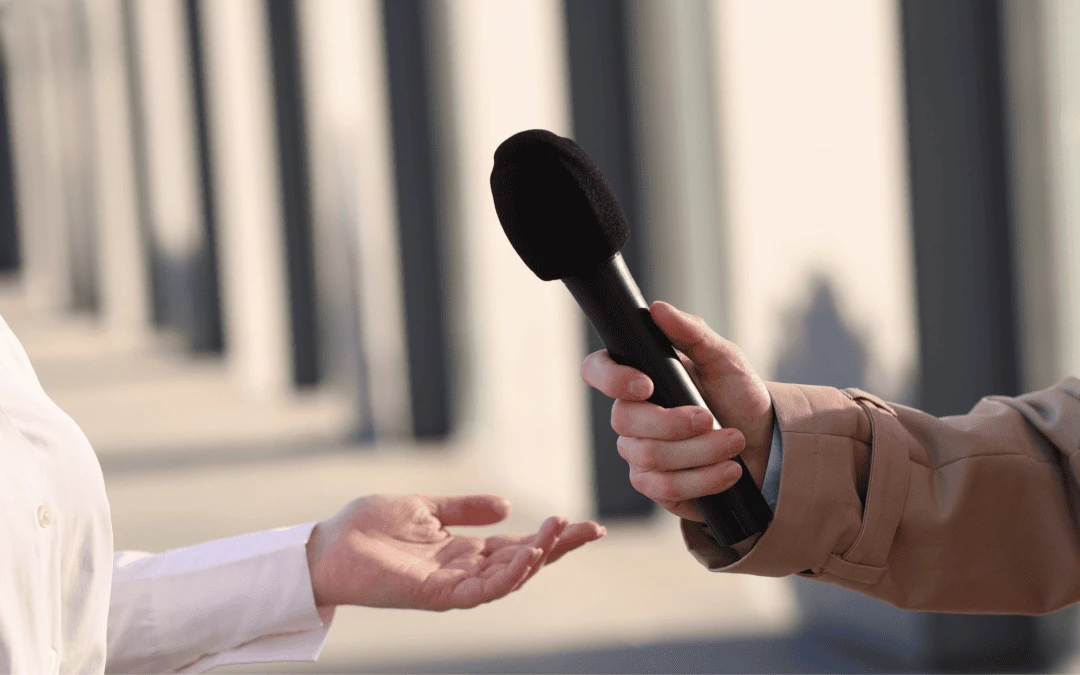
Every organization eventually reaches the moment when a reporter needs a quote. A journalist is working on a story about your industry or your community, and someone has to go on the record. The people who get that call, and who get quoted well, are rarely the ones with the most impressive title. They are the ones who prepared.
What is media training, and why does it matter?
Media training is the practice of preparing a spokesperson to communicate clearly and confidently with journalists, so that your key messages survive from the interview into the published story. It is a learnable skill rather than a personality trait, and it rewards preparation far more than charisma. Whether you are a business owner, an executive, a nonprofit director, or a specialist whose field is suddenly in the news, being ready for the media turns a single interview into lasting credibility. The goal is not to sound rehearsed. It is to stay in control of the conversation while giving a reporter something accurate and quotable.
Why earned media beats advertising
Getting your name into a news story is what public relations professionals call earned media, and it carries a credibility that paid advertising cannot buy. Independent coverage reads as third-party validation rather than a paid message, and audiences respond to it differently. Local news outlets in particular remain the most trusted source of information for most people, with roughly 70% of Americans expressing at least some trust in what their local news organizations report, well ahead of national outlets and social media (Pew Research Center, 2025). When a trusted outlet quotes you, that credibility carries over, which is why a single placement often does more for your reputation than months of self-promotion.
Start with your message, not the microphone
Every strong interview begins long before the reporter arrives, with two or three key messages you want the audience to remember. This is the discipline most people skip, and it is the one that separates a confident source from a nervous one. Decide in advance what you need to say, then build everything else around it.
Those messages have to be delivered in sound bites, short and vivid statements a reporter can lift cleanly into a story. Keep your answers brief, speak in concise sentences, and use a well-chosen anecdote or comparison to make a point stick in a way a dry fact never will. Just as important is what you leave out. Your audience is the general public, not your colleagues, so insider acronyms and technical shorthand need to be translated into plain language or dropped entirely.
How to stay on message and bridge tough questions
Reporters ask the questions and decide when time is up, which is why staying on message is the heart of media training. The core tool is the bridge, a technique that lets you acknowledge a question and then transition to the point you actually came to make. A bridge sounds like “what matters most here is,” or “the bigger picture is,” and it keeps you in control without appearing to dodge. Done clumsily it reads as evasion, so the phrasing has to sound natural in your own voice, which only happens with rehearsal.
The hardest questions call for composure rather than cleverness. Do not speculate on hypothetical “what if” scenarios, because a guess can easily become tomorrow’s headline. Avoid saying “no comment,” which audiences almost never hear as neutral. If there is something you genuinely cannot discuss, say so, explain briefly why, and steer back to what you can address.
On background, off the record: know the ground rules
Two phrases trip up more sources than any others. Speaking “on background” generally means a reporter can use what you say but cannot attribute it to you by name, while “off the record” means the information is not for publication at all. The critical catch is that both must be agreed to in advance, not declared after the words have already left your mouth, and the definitions vary enough between journalists that you should confirm the terms every time. The safest working assumption is that anything you say could appear in print with your name attached.
Match your delivery to the format
The interview format changes how you deliver those carefully prepared messages. A print reporter may spend ten or fifteen minutes drawing out context, so depth and nuance help. A live television or radio segment may last only two or three minutes, so you lead with your point and stop. On camera, your physical presence carries as much weight as your words, and habits like slouching, glancing away, or fidgeting quietly undercut your credibility no matter how strong the answer. Look at the reporter rather than the lens, unless a producer tells you otherwise.
Where media readiness becomes a system
None of this is complicated to understand. Executing it consistently is another matter. Genuine media readiness means identifying the reporters who cover your field, developing key messages and bridging phrases that sound like you, rehearsing through mock interviews so you can hear and see how you come across, and being prepared before the phone rings rather than scrambling after. It is ongoing work, not a one-time seminar, and most leaders simply do not have the hours to build and maintain it alone.
That is the work C2 Communications does every day. Media training is a core public relations discipline we deliver for clients across industries throughout Southwest Florida, from business owners and executives to nonprofit leaders and community experts. We build the message maps, coach the delivery, cultivate the reporter relationships, and capture the coverage so a single interview becomes a lasting authority signal. If you want to be the person local reporters call first, let’s talk.
The reporters are always going to need a source. The only real question is whether it will be you, and whether you will be ready when they call. When you are ready to turn your expertise into a credible media presence, schedule a discovery call and we will map out where to start.
Frequently asked questions about media training
What is a media sound bite?
A sound bite is a short, self-contained statement, usually one or two sentences, that a reporter can quote cleanly without needing extra context. Strong sound bites are vivid, jargon-free, and built around a single idea, which makes them the version of your message most likely to appear in the final story.
What does “off the record” mean in an interview?
Off the record means the information you share is not for publication and cannot be used in the story. It is different from “on background,” where a reporter can use the information but cannot attribute it to you by name. Both terms must be agreed to with the journalist before you speak, not claimed afterward, and their exact meaning can vary by reporter, so confirm the terms each time.
What is bridging in a media interview?
Bridging is a technique for moving from a question you were asked to the message you want to deliver. You briefly acknowledge the question, then transition with a phrase like “what matters most is” before making your point. It keeps a spokesperson in control of the conversation without appearing to dodge.
How do you prepare for a media interview?
Preparation starts with defining two or three key messages, shaping them into concise sound bites, and anticipating the toughest questions you might face. From there, practice delivering your answers out loud, ideally in a mock interview, and confirm the format and ground rules with the reporter in advance so nothing catches you off guard.